
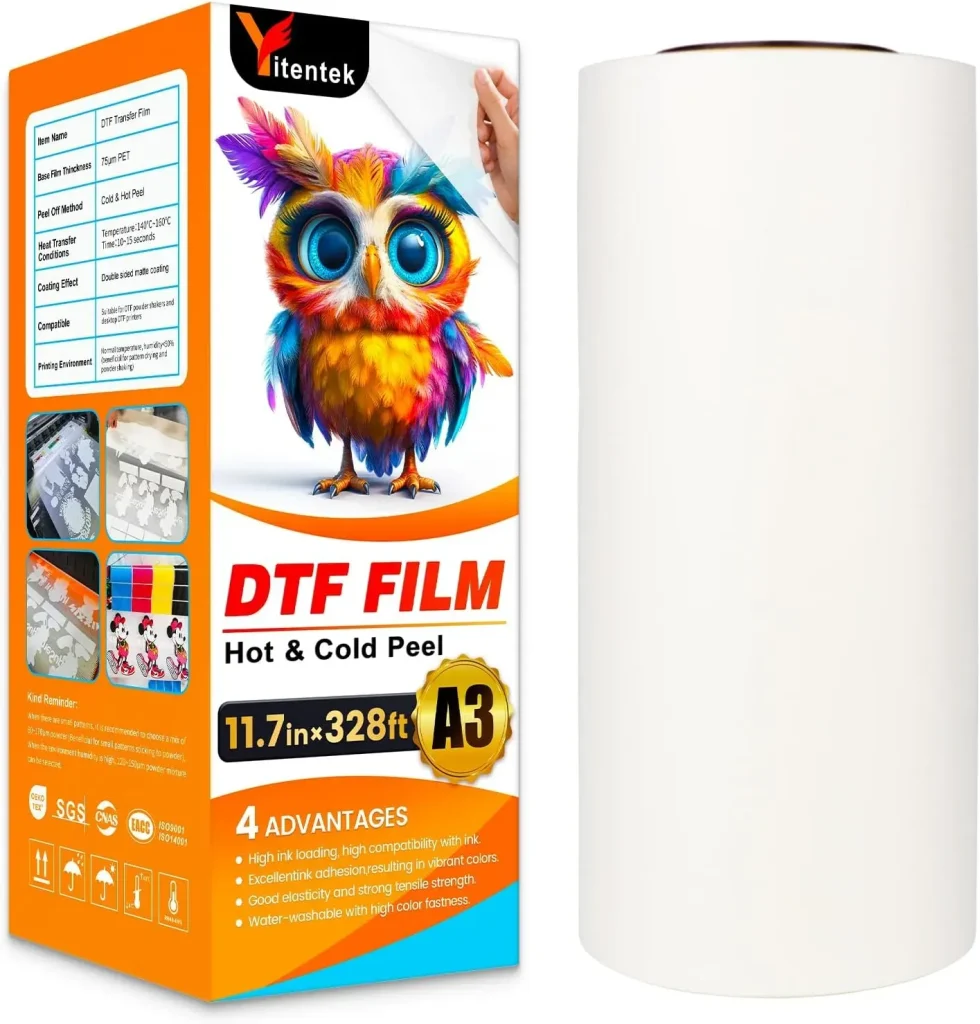
DTF film revolutionizes how designers approach customized apparel, textiles, and other substrates. By combining a versatile film, water-based pigment inks, and a simple heat-press workflow, DTF printing technologies can deliver vibrant colors, reliable adhesion, and streamlined production across a wide range of fabrics. To truly master DTF film, you need to understand three core pillars: materials, DTF curing temperature, and finishing techniques, each influencing color fidelity, durability, and the garment’s hand. This introductory guide draws on practical, experience-based insights to help you optimize every step from design to final wearability. Whether you are new to DTF or seeking to improve your process, a systematic approach to material selection, curing protocols, and finishing methods yields consistent, scalable results that satisfy customers.
Viewed through the lens of related technologies, this film-based transfer approach can also be described as a print-on-film process that uses a printable polyester sheet backed by a heat-activated adhesive. In practice, the method relies on pigment inks printed on a transfer film, followed by a powder adhesive and a controlled curing step, before being bonded to fabrics with pressure and heat. This terminology aligns with other digital garment transfer methods and helps shops optimize color accuracy, durability, and hand feel while remaining flexible across cotton, blends, and synthetics. As with any modern textile workflow, attention to pre-press readiness, precise heat settings, and post-transfer finishing will influence wash fastness and overall customer satisfaction.
DTF Film Essentials: Materials, Inks, and Adhesives for Consistent Color
DTF film sits at the heart of the process, a PET-based substrate that carries the printable layer and adhesive. Choosing the right film, release layer, and thickness—typically in the 75–110 micron range—helps you handle prints smoothly, apply adhesive evenly, and achieve predictable transfers across fabrics. When paired with water-based pigment inks and a well-balanced adhesive powder, the materials work together to deliver vibrant color, soft hand feel, and durable adhesion that stands up to washing. This is the foundation of effective DTF printing and Direct-to-film transfer for apparel and textiles.
To achieve consistent results, you must select materials that play well together and maintain color fidelity from print to post-press. Consider the film’s release layer for clean image release, and match it with inks that hold color during the curing step. Calibrated color management—using RIP software and printer profiles tailored to your ink, film, and powder combo—reduces shifts and ensures reproducible outcomes. The powder adhesive, including its particle size, influences opacity and texture, making it a critical finishing factor in any DTF workflow.
DTF Curing Temperature: Optimizing Time, Temperature, and Humidity
Curing is the hinge that activates the adhesive and locks colors into fabric. Typical DTF curing temperature ranges from 160°C to 170°C (320°F to 340°F) with dwell times of 10–20 seconds, though exact numbers vary by film, powder, and fabric. Starting with the manufacturer’s guidelines and running small test batches helps dial in the sweet spot for your specific material combination. Too much heat or too long a dwell can cause ink bleed or scorching, while too little can lead to poor adhesion and peeling.
Uniform heat and pressure are essential during curing. A flat heat platen with even distribution prevents hot or cold spots that cause incomplete bonding. Humidity also plays a role: high humidity can cause powder clumping, while very dry conditions increase static and powder dispersion. Controlling the environment and storing powder and film properly helps maintain consistency across runs and reduces variability in adhesion and wash durability.
Finishing Techniques that Elevate DTF Transfers
Finishing techniques are the steps after curing that ultimately determine wear performance and appearance. The transfer to fabric relies on precise heat and pressure settings, with typical ranges around 160–170°C (320–340°F) for 10–20 seconds, plus the right pressure to ensure complete bonding. For dark garments, a pre-press or backing strategy can improve brightness and reduce color shifting, while a post-press cure or light protective coating can boost wash durability.
Peel method choice—hot peel versus cold peel—depends on ink chemistry and adhesive formulation. Hot-peel transfers are common for many DTF films, but some combinations benefit from a cold-peel approach to minimize smudging and edge cracking. Additionally, careful post-press care instructions help customers maintain the transfer’s vibrancy: wash inside out, avoid high heat on dryers, and consider pre-washing garments for longevity on new prints.
Design and Printing Workflow: From Concept to Color Fidelity in DTF
A robust DTF workflow begins with design, then prints calibration and color management. Consider shrinkage, image placement, and seam alignment during layout, so the final transfer sits correctly on the garment. Regular maintenance of printers, print heads, and film handling reduces misprints and keeps color output predictable. This aligns with the broader DTF printing best practices that tie design intent to fabric performance.
Color fidelity hinges on a carefully calibrated pipeline: RIP-driven color management, calibrated profiles, and consistent handling from film to press. Treat substrates like cotton, blends, and poly fabrics as distinct materials with unique curing and finishing needs. Keeping a reference library of tested settings for different film, ink, and powder combinations helps your team reproduce preferred results and reduces waste across production runs.
DTF vs Sublimation: Choosing the Right Path for Your Fabrics
Understanding when to choose DTF film versus sublimation is a key strategic decision. DTF offers versatility across fabric types, including cotton and blends, with color fidelity on light and dark fabrics and without pre-coating on white surfaces. Sublimation excels on polyester and synthetic blends when full-coverage designs can sublimate, delivering bright, allover color but requiring suitable substrate and white underbase considerations on light fabrics.
When selecting between DTF printing and sublimation, factor fabric composition, color brightness on dark fabrics, cost per transfer, and durability. For cotton-rich garments, DTF can deliver a softer hand feel and easier finishing, while sublimation shines on polyester with vibrant results under the right conditions. By weighing these LSIs—fabric type, color behavior, and durability—you can map the best method to the project.
Quality Control and Troubleshooting for Consistent DTF Film Transfers
A practical QC approach reduces surprises and waste. Start with a pre-test batch to determine optimal cure temperature and dwell for each substrate, film, and powder combination. Calibrate printer profiles for accurate color output on the chosen film, verify powder adhesion, and ensure even distribution to minimize misprints. Documenting settings creates a reusable library that supports repeatable results across jobs and teams.
Even with a solid setup, issues can arise. Common problems include color shifts, uneven powder melting, white specks, edge lifting on dark fabrics, or peeling after washing. Address these by verifying cure temperature, dwell time, and garment compatibility, and consider additions like a light top-coat or backing to improve durability. A clear troubleshooting checklist—covering color management, curing, and finishing steps—helps technicians diagnose and fix issues quickly while preserving throughput.
Frequently Asked Questions
DTF film vs sublimation: how do they differ for apparel printing?
DTF film (Direct-to-film transfer) uses a PET-based film with an adhesive layer and water-based pigment inks, offering versatility on cotton, blends, and many fabrics. Sublimation requires polyester substrates and prints with inks that sublimate under heat for all-over designs. DTF often delivers brighter colors on dark fabrics with a white underbase option and tends to be easier to finish on a range of materials.
What is the recommended DTF curing temperature for reliable transfers?
DTF curing temperature is typically 160–170°C (320–340°F) with a dwell of 10–20 seconds, depending on the film and adhesive powder. Always follow the manufacturer’s guidelines and run small tests to dial in the best settings. Temperatures or times that are too high can cause ink bleed; too low can reduce adhesion.
What finishing techniques are essential for durable DTF transfers?
DTF finishing techniques include selecting the appropriate transfer method (hot-peel vs cold-peel), using a consistent heat-press setup (temperature, dwell, and pressure), and applying any post-press curing or backing for dark fabrics. Proper finishing improves color brightness, edge integrity, and wash durability.
Which materials most influence color fidelity in DTF printing?
Color fidelity in DTF printing hinges on the film (DTF film with a stable release layer and 75–110 micron thickness), water-based pigment inks, and the adhesive powder. Use RIP-based color management, calibrated profiles for your printer and film combo, and consistent powder particle size to achieve predictable, accurate colors.
How can I optimize the DTF transfer workflow to reduce waste and improve consistency with finishing techniques?
Adopt a simple QC routine: pre-test materials to determine optimal cure temperature and dwell, calibrate printer profiles, ensure even powder adhesion, and test transfers on representative fabrics. Document settings for each substrate/film combo, keep materials organized, and maintain a reference library to minimize waste.
Direct-to-film transfer vs sublimation: which method should I choose for a given fabric?
Direct-to-film transfer (DTF printing) is typically preferred for cotton, blends, and non-poly fabrics, offering versatile color and a soft hand feel. Sublimation excels on polyester for full-substrate, all-over vibrancy. Choose DTF for diverse fabric compatibility and easier finishing, or sublimation when you’re targeting polyester garments and full-coverage designs.
| Section | Key Points | Practical Takeaways | Notes |
|---|---|---|---|
| Understanding the foundation | DTF film is a PET-based substrate with printable and adhesive layers. Workflow: print with water-based pigment inks, apply adhesive powder, cure/melt powder, then transfer the image to fabric. Works on cotton, blends, polyesters. | Use a stable DTF film with a compatible ink and powder set; aim for reliable adhesion and vibrant transfers across fabrics. | |
| Materials matter — DTF film and release layer | Stable base and reliable release layer. Film thickness typically 75–110 microns. A good release layer helps the printed image release cleanly without residue. | Choose film with a stable base and appropriate thickness; verify release performance during transfer. | |
| Inks and color management | Water-based pigment inks offer strong color gamut and opacity on light/dark fabrics. Use RIP software and calibrate color profiles for printer, heads, and film to maintain color fidelity. | Calibrate color profiles and maintain consistent color management across jobs. | |
| Adhesive powder and finishing layers | Powder is applied after printing and must melt evenly. Powder particle size can affect opacity and texture. Post-cure helps ensure adhesion and reduces shedding. | Tune powder characteristics and perform post-curing to improve durability. | |
| Curing methods | Conveyor dryers, infrared cure units, or standard heat presses with controlled dwell times. Goal is to melt adhesive evenly without scorching ink or distorting colors. | Choose a curing method and monitor temperature and dwell for consistency. | |
| Substrates and garment compatibility | DTF works on cotton, polyester, blends. Dark fabrics may require a white underbase or backing. Test on small samples first. | Plan for white underbase on dark fabrics and always test fabric compatibility. | |
| Printing process basics | Print calibration, color management, and careful handling through press and curing. Design layout should account for shrinkage, image placement, and seams. Maintain printer, ink, and film. | Pre-run calibration and consistent equipment maintenance to reduce misprints. | |
| Curing: the critical step | Curing ties the printed image, powder, and garment. Key variables: temperature 160–170°C (320–340°F), dwell 10–20 seconds, humidity matters. | Start with manufacturer guidelines and test to dial in settings for your materials. | |
| Finishing techniques | Transfer to fabric with heat and pressure; peel method can be hot or cold; dark fabrics may need backing; post-press finishing and care instructions. | Choose peel method appropriately and provide care guidelines. | |
| Direct-to-film vs sublimation | DTF offers fabric versatility, color fidelity, and prints on light/dark fabrics without pre-coating. Sublimation excels on polyester all-over prints. | Evaluate fabric type, brightness on dark fabrics, cost per transfer, and durability when choosing method. | |
| Troubleshooting | Common issues: color shifts, powder not melting, white specks, peeling after washing, edge lifting on dark fabrics. | Check color profiles and cure, adjust powder, ensure uniform application, test on fabrics. | |
| Process optimization and QC | QC checklist: pre-test materials, calibrate printer, verify powder adhesion, test on representative fabrics, document settings. | Create a reference library of settings; iterate to improve consistency and reduce waste. | |
| DTF finishing techniques in practice | Pre-heat garment, use light backing for dark fabrics, maintain a cooling period, consider additional passes for dense colors, keep a tidy workflow. | Apply best practices to maximize adhesion and color stability. |