
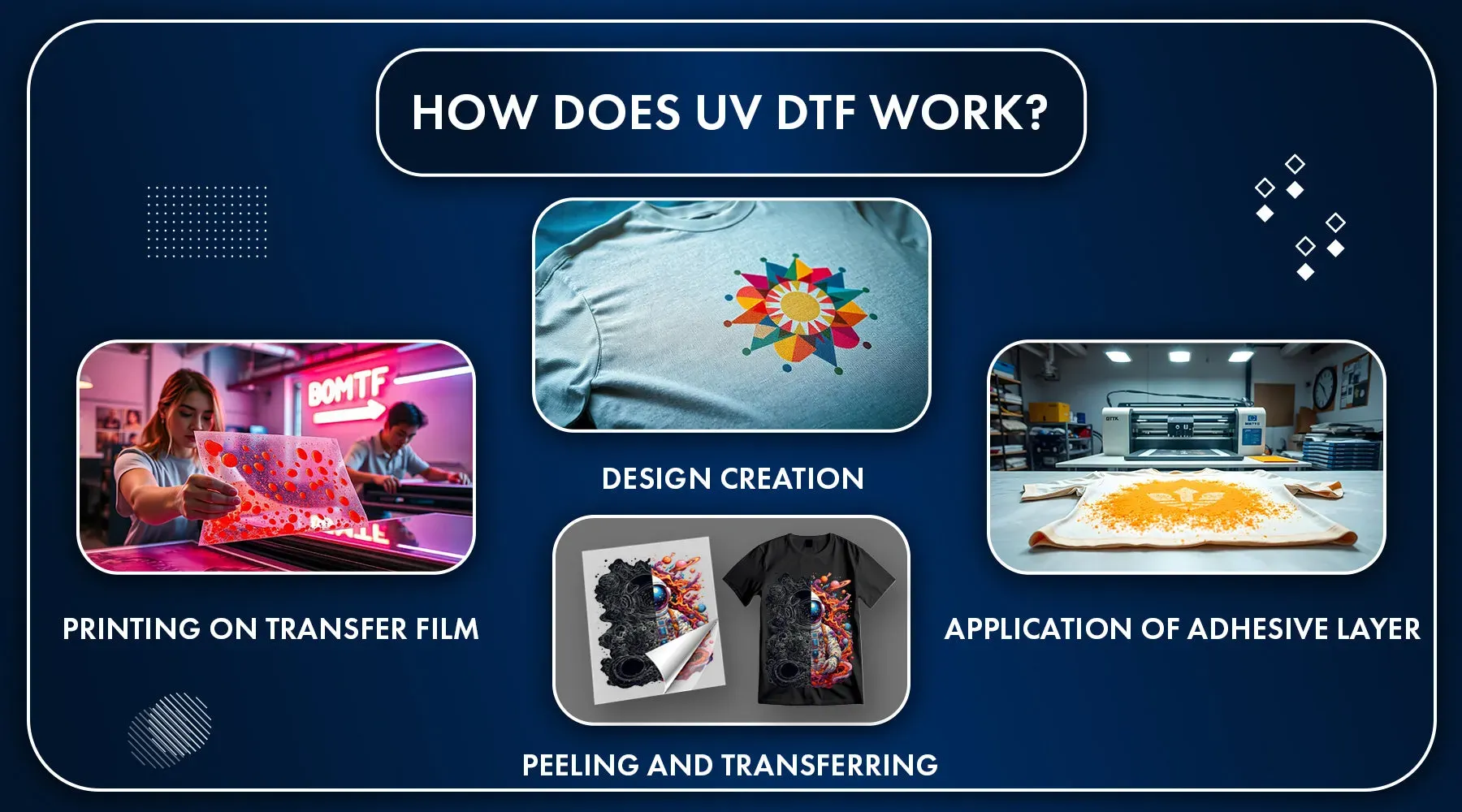
UV DTF Transfer has transformed how designers and garment makers approach custom prints. This method blends vibrant color, fabric versatility, and a streamlined workflow that appeals to modern brands. By using UV-curable inks on a film, it delivers crisp detail and a broad color gamut. When applied correctly, this approach offers reliable performance and long-lasting visuals. If you’re evaluating transfer methods, this guide will help you compare different options and identify care steps to keep designs bright.
In broader terms, the process is a direct-to-film approach using UV-curable films—a modern method for fabric decoration. DTF transfer durability is a central measure of value, influenced by substrate type, ink chemistry, and curing consistency. With proper films and careful handling, washable DTF transfers can retain color and detail through repeated washes. To maximize results, follow the transfer kit guidelines and test on a sample fabric before committing to a production run.
Understanding UV DTF Transfer: Process, Benefits, and Real-World Applications
UV DTF Transfer is a direct-to-film printing approach that uses UV-curable inks and a transfer film to print designs that are heat-pressed onto fabrics. The ultraviolet cure locks in color quickly, delivering crisp lines, a wide color gamut, and a smooth surface feel. When described as UV DTF printing, this method shows strong performance on cotton, cotton blends, and some synthetics when process parameters are carefully tuned.
Beyond the initial brightness, the practical value lies in durability and versatility. With proper substrate selection, precise curing, and controlled post-press handling, UV DTF transfers resist cracking and fading through regular wear and washing. For designers targeting comfortable, vibrant garments, UV DTF Transfer combines print quality with durable, washable performance.
UV DTF Printing vs Traditional Methods: When to Choose UV DTF Transfer
Compared with standard DTF, screen printing, or vinyl heat transfers, UV DTF printing often cures faster and can capture subtle gradients and fine detail with less perceptible texture. The approach is well-suited to complex artwork and multi-color designs, while maintaining a lightweight hand on the fabric.
This makes UV DTF Transfer a strong choice for small runs and on-demand production, where consistency and color accuracy matter. It also supports achieving colorfast DTF results when paired with compatible fabrics, proper pre-treatments, and calibrated heat-press settings.
Maximizing DTF Transfer Durability Across Fabrics
Fabric choice heavily influences durability. Natural fibers like cotton typically yield the strongest adhesion for UV DTF transfers, while blends and certain synthetics may require tweaks to pre-treatment, ink density, or heat settings. Understanding DTF transfer durability helps designers select fabrics and finishes that maximize longevity.
Key parameters such as heat, dwell time, and pressure must be balanced. Too little heat leaves the ink under-cured, while too much can distort the print or damage the fabric. A controlled cooldown after pressing helps the bond form evenly, supporting long-term wear and minimizing micro-cracking.
Maintaining Washability: Strategies for Washable DTF Transfers
Washability depends on adhesive performance and any protective coatings used in the transfer system. Following best practices for washable DTF transfers—such as inside-out washing, gentle cycles, and mild detergents—helps preserve brightness and adhesion over many washes. These steps align with established DTF care and maintenance routines.
When in doubt, test a sample garment under your typical laundering routine and adjust accordingly. Avoid high heat and harsh additives, which can accelerate color loss or edge lifting. Drying on lower heat or air-drying, plus ironing on the reverse side, supports ongoing washability.
DTF Care Instructions: Practical Steps for Longevity
DTF care instructions offer a practical blueprint for longevity. A typical plan covers pre-wash considerations, gentle washing, air drying, and safe ironing to protect the printed image. Following these guidelines helps maintain adhesion, color, and surface smoothness throughout the garment’s life.
Documentation of test results and consistent production parameters reduces variation and speeds troubleshooting. By building a repeatable care routine, you ensure each batch meets the same quality standards from first wear to many washes.
Fabric, Color, and Care: Achieving Colorfast DTF on a Range of Garments
Fabric, color, and substrate choice set the ceiling for colorfast DTF performance. Natural fibers such as cotton and cotton blends generally offer strong bond strength, while darker fabrics often require an underbase or light underlayer to preserve vibrancy and legibility of fine details.
Color management for UV DTF printing involves planning ink density, underlayers, and post-treatment. With the right combination, designs stay vivid after washing, maintaining edge sharpness and smooth color transitions across a range of garments and colors, delivering colorfast DTF results.
Frequently Asked Questions
How durable is UV DTF Transfer compared to other methods in terms of DTF transfer durability?
UV DTF Transfer offers strong durability when applied to appropriate fabrics and cured correctly. Factors such as substrate compatibility (cotton and blends typically perform best), precise heat press parameters, and proper post-press handling all influence DTF transfer durability. With proper curing, UV DTF Transfer can match or exceed many traditional methods on basic garments, with minimal cracking and good color retention over time.
Which fabrics work best for UV DTF Transfer and colorfast DTF results?
Natural fibers like cotton and cotton blends generally deliver the strongest UV DTF Transfer performance and colorfast DTF results. Some synthetics can work with adjustments to pre-treatments and curing, but natural fibers are the most reliable for durability and color stability. Dark fabrics may require a white underbase or specific color strategies to preserve vibrancy.
Is UV DTF Transfer washable, and how does washability compare with washable DTF transfers?
Yes, UV DTF Transfer is designed to be washable. For best washability, turn garments inside out, use cold or warm water with a mild detergent, and avoid bleach. Air-dry when possible and use low heat if tumble drying. With proper care, UV DTF transfers maintain color and integrity through multiple washes, similar to other high-quality washable DTF transfers.
What are the essential DTF care instructions for maintaining UV DTF Transfer?
Key DTF care instructions for UV DTF Transfer include: pre-wash considerations when applying to new fabrics, washing guidelines (gentle cycles, mild detergent, no fabric softeners), drying (prefer air drying or low heat), ironing practices (avoid direct heat on the print), and proper storage (store flat or hanging to prevent creasing). Always follow the transfer kit’s specific guidelines for best results.
How does UV DTF printing compare to standard DTF and other methods for color and durability?
UV DTF printing generally offers quick curing, sharp detail, and a broad color gamut, which can translate to strong color retention and crisp images. Compared to standard DTF, UV DTF often provides faster curing and potentially higher edge definition, while still delivering solid durability when applied correctly. When weighing options like screen printing or vinyl heat transfer, UV DTF printing excels in small runs with complex details and gradients.
What steps help maximize durability and colorfast results for UV DTF Transfer?
To maximize durability and colorfast results, test on fabric samples to optimize heat, time, and pressure; ensure substrate is clean and flat; calibrate temperatures across devices; plan color choices with the substrate in mind; use appropriate underlays for dark fabrics; allow complete cooling after transfer; and follow verified post-transfer care guidelines (washing, drying, ironing and storage). These practices help maintain colorfast DTF results over many wears and washes.
| Aspect | Key Points |
|---|---|
| What is UV DTF Transfer | Direct-to-film transfer using UV-curable inks printed on a specialized film; cured with UV light for quick set; delivers crisp lines and broad color gamut; adheres to cotton, blends, and some synthetics with strong color retention when properly applied. |
| Durability | Depends on substrate compatibility, ink chemistry and curing, heat press parameters, and post-press handling. With proper curing and fabric choice, UV DTF can be very durable, often comparable to or exceeding traditional methods on cotton tees, hoodies, and light fabrics. |
| Washability | Strong adhesion and colorfast inks; may include top coats. To maximize washability: turn inside out, use cold/warm water, mild detergent, avoid bleach, air-dry or low-heat drying, and iron on reverse or with barrier. |
| Care & Longevity | Pre-wash considerations, gentle washing, proper drying, careful ironing (no direct heat on print), and proper storage help longevity. Always follow transfer kit guidelines and test on a sample garment. |
| Fabric & Substrates | Natural fibers like cotton and cotton blends perform well; some synthetics can work but may need pretreatment or adjusted heat/pressure. Dark fabrics may require underbases to maintain vibrancy. |
| Comparisons with Other Methods | UV DTF vs standard DTF: quicker curing and sharpness potential; UV DTF vs screen printing: good for small runs and detailed designs; UV DTF vs vinyl: lighter feel and better fabric integration. |
| Practical Tips | Test on fabric samples; ensure clean, flat substrates; calibrate machines; plan color management with substrates in mind; store prints properly after transfer. |
| Troubleshooting | Peeling edges (adjust pressure/curing), fading after wash (check wash/drying methods), cracking (adjust dwell/pressure), white/hazy film (ensure complete curing and cleanliness). |
| FAQs | Durability comparisons; fabric compatibility; gym-wash suitability and testing recommendations. |